News
High-Performance Thermal Materials for Next-Generation Electronics
With the increasing demand for higher power density and miniaturized electronic systems, efficient thermal management has become critical to maintaining device performance and long-term reliability.
Singleton engineers advanced thermal interface materials (TIMs) based on graphene and boron nitride formulations, delivering solutions featuring:
• High thermal conductivity
• Low thermal resistance
• Excellent interface conformity
• Long-term reliability
Singleton provides advanced thermal interface solutions designed to address the increasing thermal challenges of high-performance electronic systems. Our thermal interface pads are designed for demanding applications including optical modules, semiconductor devices, AI computing systems, servers, telecom equipment, and new energy vehicle(NEV) electronics.
1. Graphene Thermal Pad
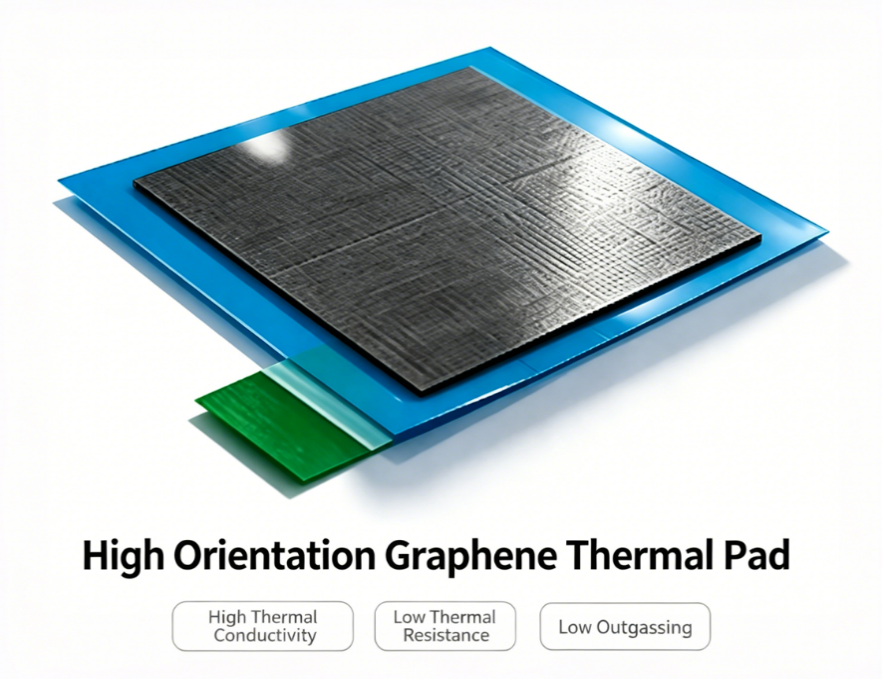
High Thermal Conductivity & Low Thermal Resistance
Through advanced orientation-controlled processing, graphene fillers are vertically aligned to create efficient thermal conduction pathways.
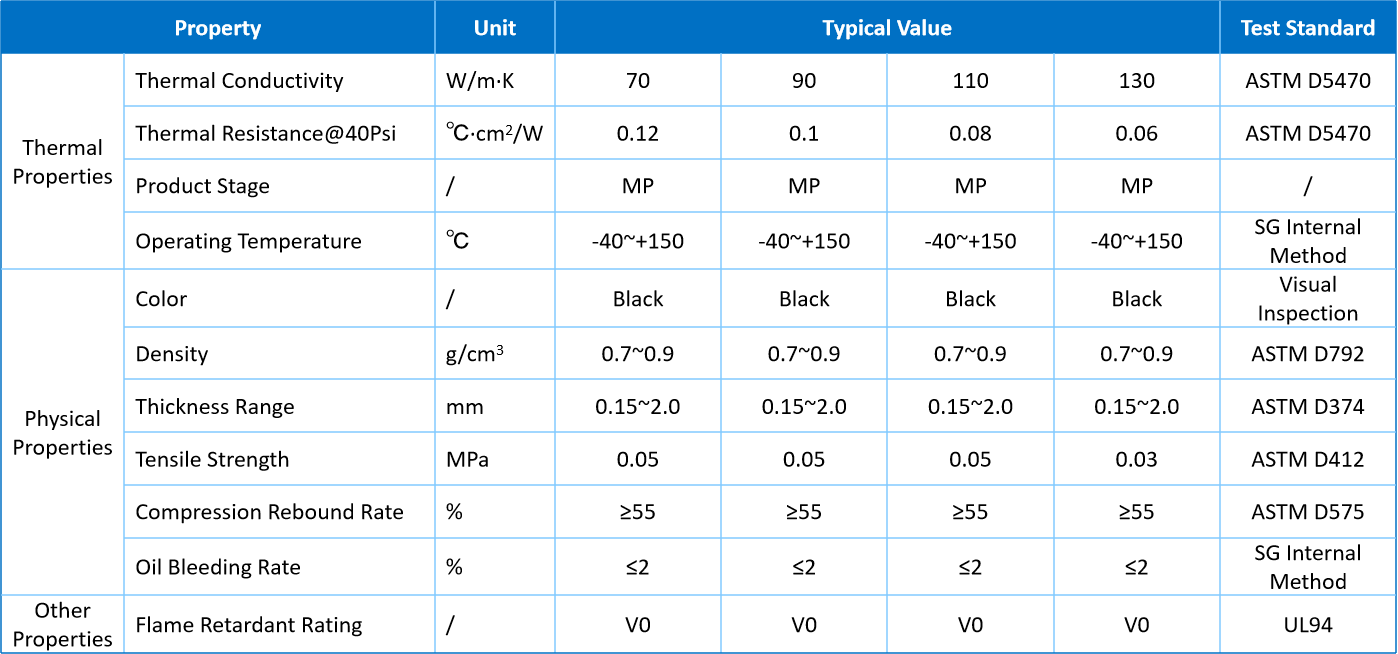
• Thermal conductivity up to 130 W/m·K
• Thermal resistance as low as 0.06 ℃·cm²/W
• Excellent interfacial contact performance
• Effective gap filling for improved heat transfer
The flexible structure enables reliable thermal contact in thin and highly integrated electronic devices.
High Elastic Recovery & Assembly Compatibility
Designed with a flexible, high-resilience structure:
• Elastic recovery rate ≥55%
• Low-pressure compression enables intimate contact with uneven or irregular interfaces.
• Maintains excellent shape recovery capability, enhancing product reliability and extending service life after prolonged use
Low Oil Bleeding and Low Volatility for High-Cleanliness Applications
Compared with conventional silicone-based thermal pads, this material demonstrates significant advantages in:
• Low volatility and low migrationcharacteristics
• Reduced silicone oil contamination risk
Long-Term Reliability for High-Power Applications
With excellent thermal stability and mechanical durability, the graphene thermal interface pad supports continuous operation under demanding conditions. It effectively:
• Improves heat dissipation efficiency
• Reduces thermal failure risks
• Enhances system reliability
2. Boron Nitride Thermal Pad
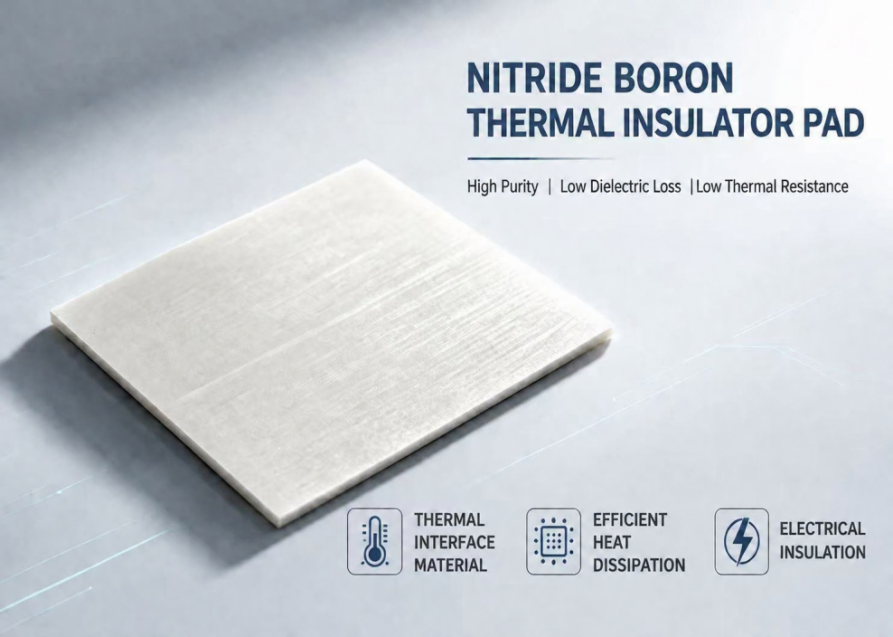
Optimized Thermal Conduction Network
Using advanced filler orientation technology, vertically aligned hexagonal boron nitride (h-BN) creates efficient through-plane thermal pathways.
• 3D thermal conduction network
• Enhanced heat transfer efficiency
• Improved temperature uniformity
• Reduced hotspot formation
High Thermal Performance & Low Thermal Resistance
The optimized material structure delivers:
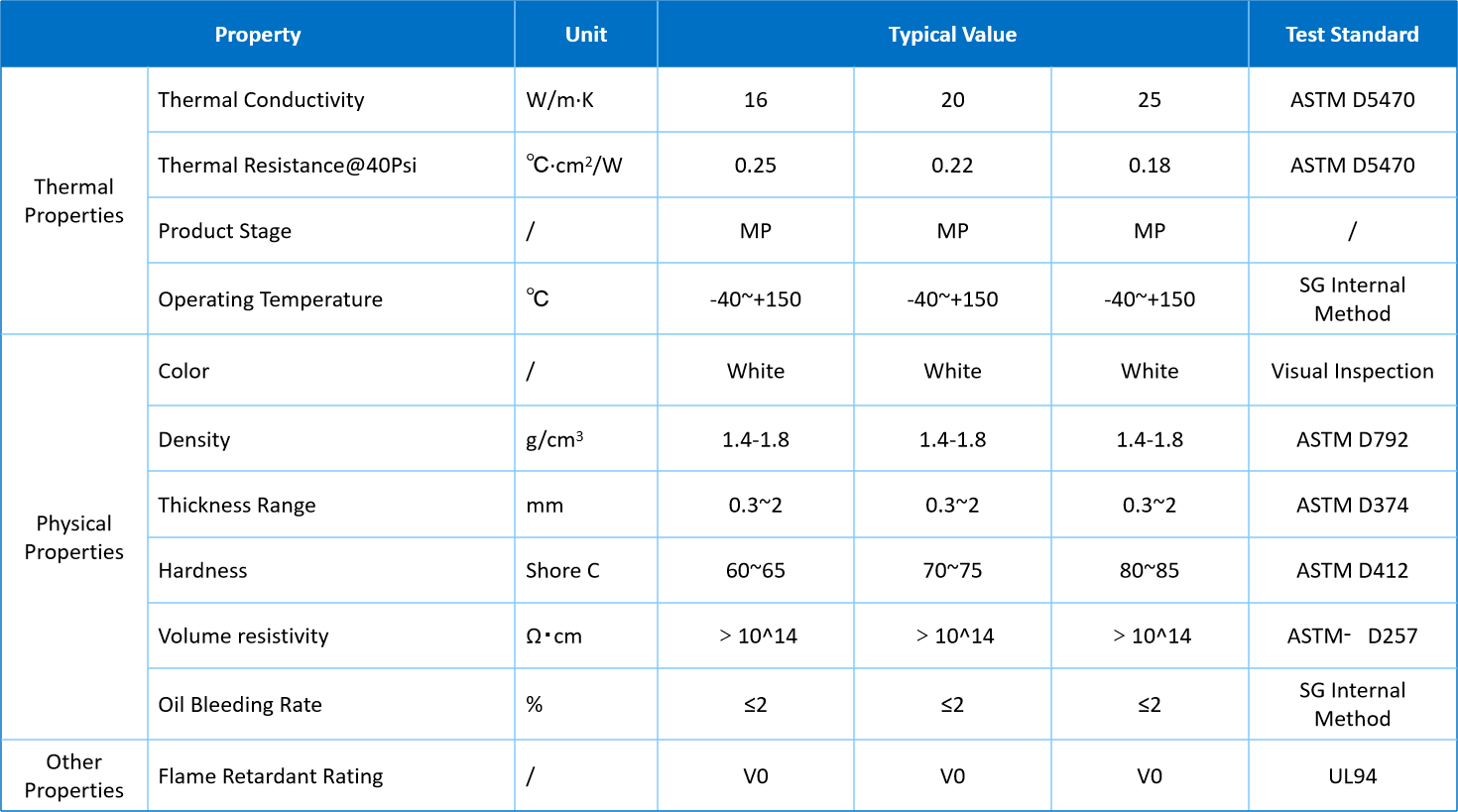
• Thermal conductivity up to 25 W/m·K
• Excellent interfacial conformity
• Reduced air-gap thermal resistance
• Stable thermal performance in thin-profile applications
Low Density and Volatility for Lightweight Applications
The material combines lightweight design with efficient thermal conduction capability. Key advantages include:
• Low density
• Low volatility
• Low oil migration
• Excellent environmental stability
Long-Term Reliability and Excellent Aging Resistance
The stable material structure provides excellent resistance against aging-related degradation.
• Performance variation remains below 10% after long-term aging tests
Reliable Thermal Management for Future Electronics
Singleton’s graphene and boron nitride thermal interface pads provide efficient heat transfer solutions for advanced electronic systems.
With continuous innovation in thermal materials and manufacturing technologies, Singleton provides high-performance, customized thermal management solutions for customers worldwide.